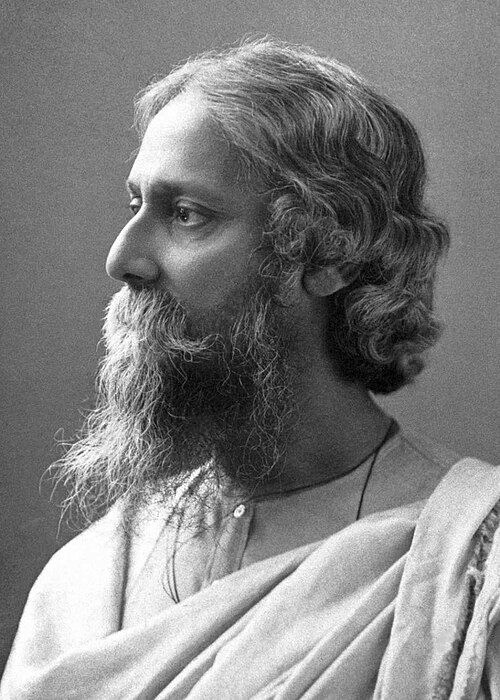
Leo Tolstoy: Career Story and Lessons
Novelist and author of War and Peace

Leo Tolstoy wrote two of the most admired novels ever published, then turned away from fiction to ask how a person should live. He was born into the Russian nobility, studied for a short time at university, served as an officer in two wars and spent decades at his country estate writing, farming and raising a large family. His career had two very different halves, the novelist and the moral teacher, and both changed the world. This story follows his path step by step, including the conflicts that marked his later years, and shows what his choices can teach any writer or professional.
Quick facts
- Category
- Writers and Thinkers
- Born
- September 9, 1828 (August 28 in the old Russian calendar), Yasnaya Polyana, Russia
- Died
- November 20, 1910, Astapovo, Russia, aged 82
- Best known for
- War and Peace; Anna Karenina; The Death of Ivan Ilyich; his writings on nonviolence
- Key roles
- Novelist, short-story writer, educator, essayist and moral thinker
A count’s early life
Lev Nikolayevich Tolstoy was born at Yasnaya Polyana, his family’s estate about 120 miles south of Moscow. His mother, Princess Maria Volkonskaya, died when he was not yet two, and his father, Count Nikolai, died when he was nine. Relatives raised him and his siblings, and private tutors taught him languages and literature. Tolstoy later wrote about childhood with a freshness that few authors have matched, drawing on these early memories.
University and a restless youth
At 16 he entered Kazan University, first studying oriental languages and then law, but he found the lessons dull and left in 1847 without a degree. He returned to the estate and tried to improve the lives of his serfs, but the plan failed, since the peasants distrusted him. He then spent several years in Moscow and St. Petersburg gambling, drinking and running up debts, and he kept a diary in which he criticized himself and made rules for self-improvement.
Army service and the first stories
In 1851 Tolstoy joined his older brother Nikolai in the Caucasus and enlisted in the army. There he began his first work, Childhood, which appeared in a leading Russian magazine in 1852 and made him known as a promising writer. He fought in the Crimean War and served in the defense of Sevastopol in 1854 and 1855. His Sevastopol Sketches described the siege with honest, unromantic detail and were read by the tsar. The experience of war gave him material that he would use in his later novels.
Travel and a school for peasant children
After the war Tolstoy traveled in Europe in 1857 and again in 1860 and 1861, visiting schools and meeting writers. His brother Nikolai died of tuberculosis in 1860, a loss that deeply affected him. Back at Yasnaya Polyana he founded a school for peasant children in 1859, where he taught without strict discipline and published an educational journal. He also wrote primers and stories for children. He argued that teachers should learn from students, an idea ahead of his time.
Marriage to Sophia
In 1862 Tolstoy, 34, married Sophia Behrs, the 18-year-old daughter of a Moscow doctor. They had thirteen children, of whom eight survived to adulthood. In the early years the marriage was happy, and Sophia managed the estate, raised the children and copied his manuscripts by hand, sometimes several times, as he revised them. Her help was essential to his productivity.
War and Peace
Tolstoy began writing War and Peace in the mid-1860s and worked on it for about six years. The novel follows several families through the Russian wars with Napoleon, from 1805 to 1812, mixing characters from many social levels with real historical figures, and including long reflections on history. He read memoirs and visited the battlefield at Borodino to prepare. It appeared in installments from 1865 and as a book in 1869. It was an immediate success and is often described as one of the greatest novels ever written.
Anna Karenina
His next major novel, Anna Karenina (1873 to 1877), tells the story of a married woman who falls in love with an officer, set alongside the tale of a landowner, Levin, who searches for meaning in work and family. Levin’s doubts echoed Tolstoy’s own, and the novel ends with Levin’s moral and spiritual search. It was also published in installments and was admired by the public and by writers such as Dostoevsky.
How he wrote
Tolstoy’s fiction is known for psychological realism: he showed what characters think and feel from moment to moment, and he used small physical details to reveal inner life. War and Peace has more than five hundred characters, many drawn from real people. He rewrote passages repeatedly, and his manuscripts show heavy corrections. He often worked in the morning, took long walks and returned to the page. Sophia’s clean copies allowed him to revise again, so each draft improved on the last. For writers today, the lesson is clear: good work often comes from many rounds of careful rewriting.
Life on the estate
Yasnaya Polyana was both a home and a workplace. Tolstoy rode horses, played chess, farmed and later joined the peasants in cutting hay. Visitors from around the world came to see him, among them writers, reformers and curious tourists, and the house became a place of pilgrimage. The estate is now a museum. Tolstoy said that he worked best when he stayed close to the earth and to ordinary tasks, and he believed that physical work kept the mind honest.
A crisis of meaning
Despite his fame, wealth and family, Tolstoy fell into deep depression in the late 1870s. He asked what the point of life was if everything ended in death, and he considered suicide. He found an answer in a simple faith based on the teachings of Jesus, particularly the Sermon on the Mount, and in the lives of ordinary peasants. He described this period in A Confession (1882), one of the most honest accounts of a spiritual crisis in literature.
The moral teacher
Tolstoy rejected the authority of the church and the state and argued for nonviolence, simple living and the equality of all people. He gave up hunting, meat and alcohol, worked in the fields and made his own boots. He wrote essays such as What Then Must We Do? and The Kingdom of God Is Within You (1894), and shorter fiction with moral themes, such as The Death of Ivan Ilyich (1886) and Hadji Murat, published after his death. In 1899 he finished a last novel, Resurrection, and gave the proceeds to help the Doukhobors, a pacifist sect, emigrate to Canada. The Russian Orthodox Church formally excommunicated him in 1901.
Influence on Gandhi and others
Tolstoy’s ideas on nonviolent resistance influenced people around the world. Mahatma Gandhi read The Kingdom of God Is Within You in South Africa and corresponded with Tolstoy in the last year of the writer’s life, naming a farm in Transvaal Tolstoy Farm. Later movements for civil rights and peace, including Martin Luther King Jr.’s, drew indirectly on the same tradition. Followers formed Tolstoyan communities, though Tolstoy himself did not try to lead a formal movement.
Famine relief and public action
In 1891 and 1892 a famine struck many parts of Russia. Tolstoy and members of his family organized relief efforts, opening hundreds of free kitchens and distributing food and seed to peasants. He also wrote articles in which he criticized the government’s handling of the crisis. The work showed that his ideas were not only theory but also led him to practical action, even though he sometimes found the experience discouraging.
Censorship and controversy
Many of Tolstoy’s later writings were banned or heavily censored in Russia. The Kreutzer Sonata (1889), a story about marriage and desire, was prohibited by the authorities and also drew criticism abroad, including from some officials in the United States. His religious and political essays circulated in secret copies and were printed abroad, with the help of Chertkov. The government watched him closely but hesitated to arrest such a famous man. His case shows how a writer’s fame can offer both protection and a platform.
Conflict at home
Tolstoy’s new beliefs created tension with his wife, who did not share them and worried about the family’s future. He wanted to give away his property and renounce the copyright on his works, while Sophia wanted to protect their children’s inheritance. His disciple Vladimir Chertkov helped to promote his ideas and became a rival for Tolstoy’s attention. The couple quarreled bitterly, and Sophia, who kept her own diaries, wrote of her suffering. Critics have pointed out that Tolstoy preached simplicity while living in a large estate and that he often failed to meet his own ideals.
Flight and death
In late October 1910, at 82, Tolstoy secretly left Yasnaya Polyana in the night, hoping to find peace. He fell ill on the train and was taken to the small railway station of Astapovo, where he died on November 20 of pneumonia. Sophia arrived but was not allowed to see him until near the end. He was buried at Yasnaya Polyana in a simple grave without a cross or a ceremony. He never won the Nobel Prize; he had asked friends to ensure that he would not receive it.
Career lessons from Leo Tolstoy
1. Observe closely
He drew on childhood, war and daily life. Detailed observation made his characters real.
2. Keep a diary
He tracked faults and goals in writing. A journal can guide self-improvement.
3. Work in long cycles
War and Peace took about six years. Large projects need patience.
4. Rely on trusted editors
Sophia’s copying helped him revise. A reliable first reader improves the work.
5. Question your own success
His crisis led to deeper work. Asking what matters can redirect a career.
6. Live your message
The gap between his teaching and his lifestyle was criticized. Consistency builds credibility.